


Indonesia continues to modernize its tax administration as part of a broader digital-government agenda, and one of the most important developments for foreign investors is the Coretax System. Introduced by the Directorate General of Taxes (DGT) under the Ministry of Finance, Coretax is designed to replace fragmented legacy platforms and create a single, integrated digital ecosystem for tax registration, reporting, payment, audit, and data matching.
For foreign-owned companies (PT PMA), expatriate directors, property developers, F&B operators, real estate brokers, and international investors planning to live or retire in Indonesia, understanding Coretax is no longer optional, it is a strategic compliance issue that directly affects licensing, banking, and investment security.
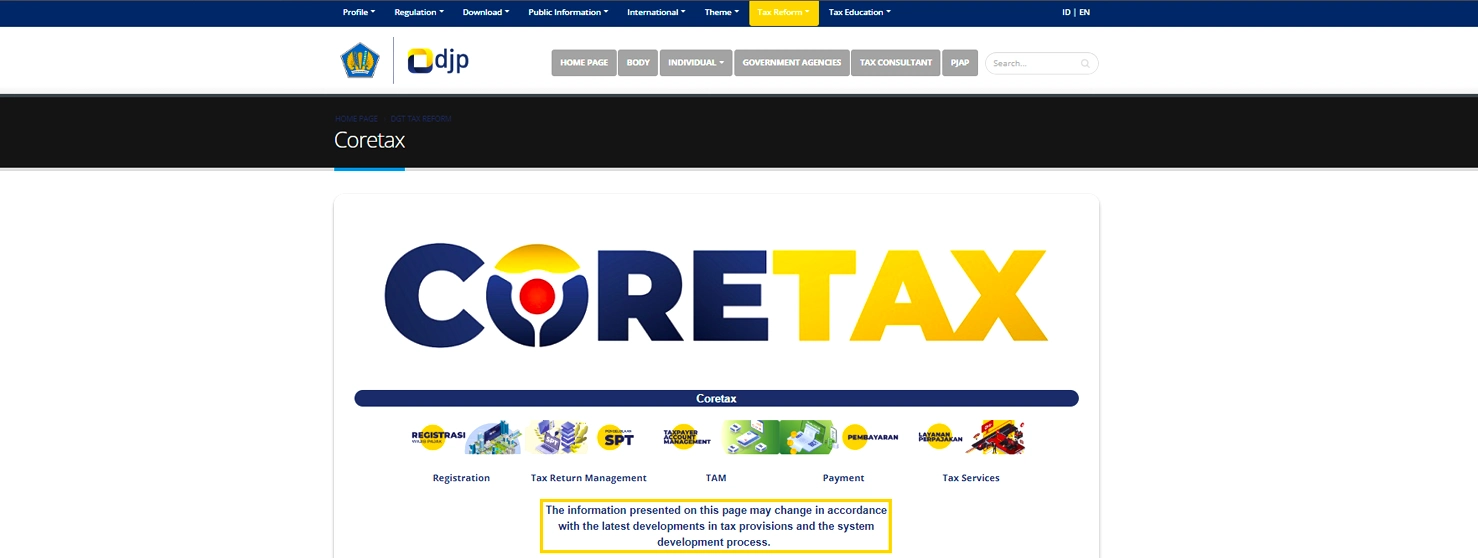
What Is the Coretax System?
The Coretax System is Indonesia’s next-generation tax administration platform developed by the Directorate General of Taxes (DJP/DGT). It consolidates multiple existing applications such as e-Registration, e-Filing, e-Billing, and tax account monitoring into one centralized digital system.
Its objectives are clear:
- Improve tax compliance and transparency through real-time data integration.
- Strengthen risk-based audits using analytics and third-party data.
- Simplify taxpayer services for individuals and corporations, including foreign taxpayers.
- Support Indonesia’s digital economy and investment climate.
The project is anchored in Indonesia’s broader tax reform agenda under the Harmonization of Tax Regulations Law (Law No. 7 of 2021) and subsequent Ministry of Finance regulations that emphasize digital reporting, information exchange, and enforcement efficiency.
Why Coretax Matters for Foreign Companies
Foreign investors often focus on incorporation, business licenses through OSS-RBA, and immigration compliance. However, tax administration is equally critical, and Coretax is reshaping how the government monitors corporate activity.
For PT PMA and foreign-controlled structures, Coretax will:
- Link NPWP (tax ID), business licenses, shareholders, and directors in one profile.
- Track VAT, withholding tax, corporate income tax, and payroll obligations automatically.
- Cross-check data with banks, customs, immigration, and local governments.
- Flag inconsistencies between reported revenue, imported goods, employees, and assets.
For industries such as real estate, property management, hospitality, F&B, and trading, where transaction volume is high and VAT exposure is significant, Coretax significantly increases audit visibility.
How Coretax Impacts Typical Foreign-Led Businesses
1. PT PMA Incorporation and Early Operations
Once a foreign-owned company is registered, its tax profile will be created and monitored within Coretax. Delays in VAT registration, payroll tax reporting, or monthly filings will be far more visible to authorities.
2. Directors and Expatriate Employees
Foreign directors and expatriates working in Indonesia must ensure their personal tax registrations, monthly withholding, and annual returns are properly aligned with company data. Coretax makes mismatches easier to detect.
3. Real Estate and Property Businesses
For developers, property managers, and brokers, Coretax strengthens oversight of:
- VAT on property transactions.
- Final income tax on land and building transfers.
- Rental income reporting.
- Local tax coordination.
4. F&B and Hospitality Operators
High-frequency sales and VAT obligations mean restaurant chains, cafés, and hotels will face tighter reconciliation between reported revenue and payment flows.
What Foreign Companies Should Do Now
To stay ahead of the Coretax rollout, foreign-owned businesses should adopt a proactive compliance strategy:
- Review Your Tax Profile
Ensure your company’s NPWP, VAT status, shareholders, and directors are correctly registered and updated. - Audit Past Filings
Conduct an internal review of corporate income tax, VAT, and withholding taxes for the last several years. - Strengthen Accounting Systems
Your bookkeeping and ERP systems should be capable of producing accurate, reconcilable data aligned with Indonesian tax formats. - Prepare Transfer Pricing Documentation
Cross-border transactions are a priority area for Indonesian tax authorities under digital monitoring. - Train Management and Finance Teams
Foreign directors and finance managers should understand Indonesian filing timelines and approval processes.
Conclusion
Indonesia’s regulatory environment is dynamic, and digital enforcement systems like Coretax reduce the margin for error. Many foreign investors encounter problems not because of bad intentions, but because of unfamiliar reporting rules, language barriers, or misaligned corporate structures.
Working with an experienced Indonesian consultancy allows you to:
- Navigate regulatory updates confidently.
- Communicate with tax authorities effectively.
- Minimize audit exposure.
- Protect long-term investment value.
- Focus on growing your business rather than firefighting compliance issues.
If you are planning to invest, operate, or retire in Indonesia and want clarity on how the Coretax System affects your company or personal tax position Indoned Consultancy is ready to help.
Our legal and tax professionals assist foreign clients with:
- PT PMA establishment and restructuring.
- Corporate and individual tax compliance.
- VAT and withholding tax strategy.
- Audit defense and tax dispute support.
- Expatriate taxation and payroll setup.
Contact Indoned Consultancy today for a free initial consultation and let our experts guide you safely through Indonesia’s evolving tax landscape.
Disclaimer
The information provided here is based on our long experience. The process or requirement may vary depending on the specific facts and conditions. Besides, the law and regulations in Indonesia subject to frequent changes. Please contact us as your consultant to get an up to date information and accurate advice. More Information click here and You can also follow our social media accounts to see the latest information posts. please click on the following links: Facebook, Instagram, Linkedin, and Twitter.
